Machine translation: Benefits and limitations
November 3, 2023
Have you ever needed to translate an official document but felt unsure where to begin? What you need is sworn translations. Performed by a Sworn Translator-Interpreter, this type of translation holds official validity and is recognised by authorities in Spain and many other countries. In this article, we will delve into what a sworn translation is, who is authorised to perform it and the contexts in which it is necessary. Find out how to ensure that your official documents are accepted and recognised internationally.
What are sworn translations and who can perform them?
A sworn translation is an official translation of any document, such as a contract or an academic certificate, among others. It is dated, stamped and signed by a Sworn Translator-Interpreter appointed by the Ministry of Foreign Affairs, European Union and Cooperation. Sworn translations must be accompanied by a copy of the original document, allowing the competent authorities to compare the translation with the original document. Sworn translators are considered to be notaries with the authority to produce official translations recognised in all countries and by the representative authorities of those countries.

Where are sworn translations valid?
As mentioned above, sworn translations are valid both in Spain and internationally, holding official status. This means legalisation is unnecessary if they are to be used within Spain. However, if the documents are to be used abroad and have been translated into a language other than Spanish, they will often require legalisation.
In Spain, the Ministry of Foreign Affairs, European Union and Cooperation is responsible for the legalisation of documents. In some cases, this legalisation may not be necessary, depending on the requirements of the body to which the translation is being submitted.
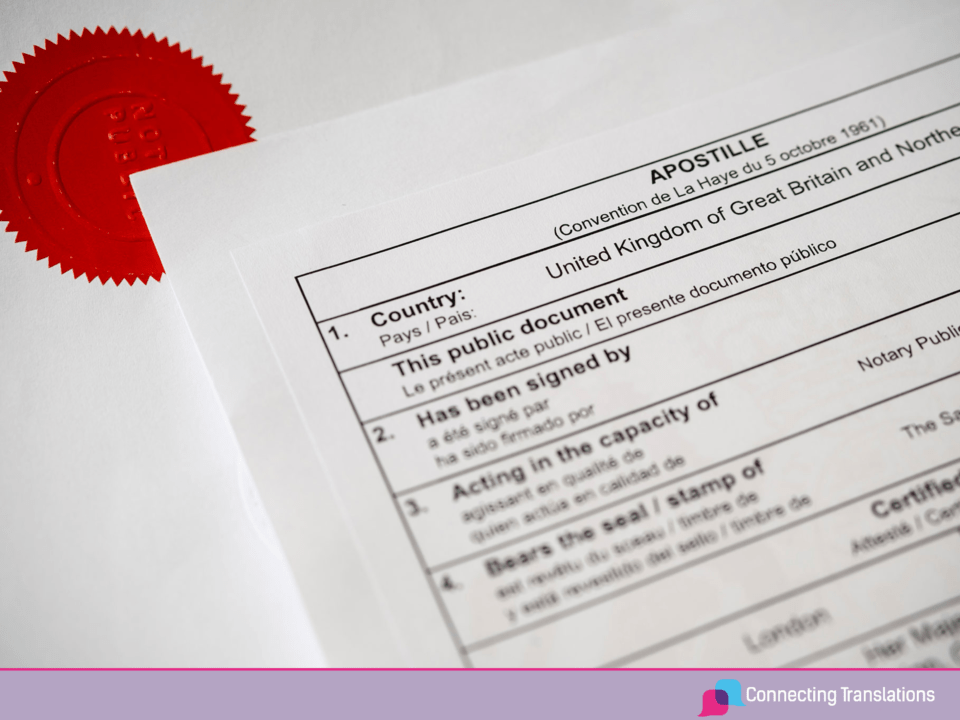
If you need a sworn translation for a foreign country, it is best to ask the relevant authorities if the translation needs to be legalised. This process can take over a month, so it is advisable to find out as soon as possible. Additionally, you can find out if there are any other legal requirements, such as whether the original documents must have the Hague Apostille for the receiving foreign entity to recognise their validity for the intended purposes.
In Spain, the Ministry of Justice is responsible for apostilling documents. If an apostille is necessary, the quickest and most cost-effective method is to first apostille the document and then request a sworn translation of the apostilled document.
Is there such a thing as a sworn translation outside Spain?
Sworn translation, as such, only exists in Spain. However, similar types of translations exist in other countries. In Spain, the role of a Sworn Translator-Interpreter is very well defined and regulated by the Ministry of Foreign Affairs, European Union and Cooperation. These translators undergo specialised training and earn the title of Sworn Translator-Interpreter by passing an official exam or through the validation of the university degree.
However, in other countries, this role is not as well defined, nor is there an equivalent appointment. Let’s take a look at some of these countries.
Sworn translation in other countries
- In the UK, for example, professional translators are typically members of the Institute of Linguists or the Institute of Translating and Interpreting, which safeguard the profession. However, for an official translation, the translator must visit a notary to certify the translation’s fidelity and accuracy. In London, there is a scrivener, a notary public who specialises in one or two foreign languages.
- The role of the sworn translator is not defined in the United States Each state’s courts and their specific regulations determine the submission and acceptance of certified and official translations. In addition, translations must be accompanied by a sworn statement or affidavit, which can slow down and complicate the process.
- In Brazil there is a similar arrangement; however, sworn translations are only valid within the country. Additionally, translators must be Brazilian nationals to be recognised as sworn translators.
- In Australia there are official translators accredited by the National Accreditation Authority for Translator and Interpreters to carry out sworn translations. This role is very similar to that of the Spanish Sworn Translator-Interpreter.
- In France translators are accredited by the Court of First Instance or the Court of Appeal and in Italy translators must go to court to take an oath before a public officer.
Conclusion
In short, sworn translations are an essential tool for those who need to submit official documents in another language. Performed by Sworn Translators-Interpreters appointed by the Spanish Ministry of Foreign Affairs, European Union and Cooperation, these translations ensure the authenticity and accuracy required for their acceptance by the competent authorities. Whether for procedures in Spain or abroad, having a sworn translation simplifies legal and administrative processes.
If you need a sworn translation, Connecting Translations is here to assist you with our expert and certified translators.